LNG carrier · Bahamas flag · built 2006
ARCTIC VOYAGER: CO₂ emissions 2018–2025
IMO 9275335 EU ETS8 reporting years
- CO₂ reported 2025
- 69,944 t
- Fuel burned
- 24,986 t
- Time at sea
- 5,814 h
- Emitted at berth
- 8% of total
- Share of year under way
- 66%
- Gross tonnage
- 118,571
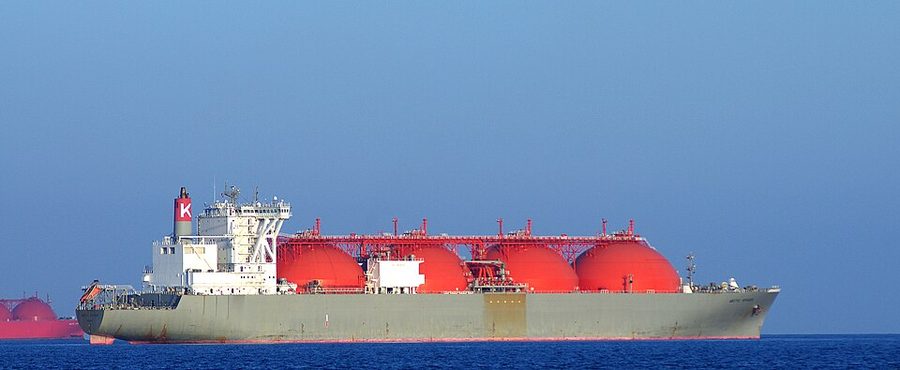

ARCTIC VOYAGER against its type
Built in 2006, it is 8 years older than the median LNG carrier on this register, which was built in 2014 (396 vessels with a known build year). At 118,571 gross tonnage it is larger than 76% of the other 377 LNG carriers with a recorded tonnage. It is one of 63 LNG carriers here under the Bahamas flag, 11.7% of the 538 on the register. The returns for 2018–2025 all give Nassau as port of registry.
Its 69,944 t of CO₂ for 2025 is 3.3 times the median of 21,516 t among the 351 LNG carriers on this register that reported for 2025. Per nautical mile it emitted 1,414.6 kg CO₂, 2.7 times the type median of 533.6 kg. It logged 5,814 hours at sea against a median of 2,940 hours for its type that year. 7.5% of its 2025 emissions were at berth; the median for LNG carriers was 2.0%. Across 8 years with reported emissions, the highest was 2019 (81,380 t) and the lowest 2021 (27,185 t). Of the 5 comparable vessels listed below with a 2025 return, 4 reported a lower CO₂ per nautical mile than this vessel.
Emissions by year2018–2025
| Year | CO₂ (t) | Fuel (t) | Distance (nm) | At sea (h) | At berth (t) | kg CO₂/nm | EEOI | Percentile |
|---|---|---|---|---|---|---|---|---|
| 2025 | 69,944 | 24,986 | — | 5,814 | 5,246 | 1,414.6 | — | — |
| 2024 | 76,429 | 29,834 | — | 5,655 | 6,335 | 1,224.0 | — | — |
| 2023 | 77,799 | 27,106 | — | 5,467 | 5,044 | 1,314.9 | — | — |
| 2022 | 63,662 | 21,598 | — | 3,081 | 2,613 | 1,853.3 | — | — |
| 2021 | 27,185 | 9,515 | — | 2,592 | 1,276 | 867.3 | — | — |
| 2020 | 73,295 | 25,503 | — | 5,106 | 3,150 | 1,205.2 | — | — |
| 2019 | 81,380 | 28,259 | — | 7,249 | 3,612 | 1,036.5 | — | — |
| 2018 | 60,515 | 19,258 | — | 8,187 | 3,633 | 791.4 | — | — |
Vessel particulars
- IMO number
- 9275335
- Ship type
- LNG carrier
- Gross tonnage
- 118,571
- Length overall
- 289.5 m
- Year built
- 2006
- Flag state
- Bahamas per EU MRV 2025
- Port of registry
- Nassau MRV 2025
- Technical efficiency (design)
- EEXI (7.67 gCO₂/t·nm)
- Verifier
- DNV, Germany
- Accreditation
- VS-16026-01
- Compliance document issued
- 2026-03-31
- Compliance document expires
- 2027-06-30
Reported CO₂ by year
Reported CO₂ in 2025 was 15.6% higher than in 2018, for EU/EEA voyages only.
From 2024 to 2025, emissions fell 8.5% and CO₂ per nautical mile rose 15.6%.Distance is missing for at least one of the two years, so activity and efficiency cannot be separated here.
Where the 2025 emissions occurred
Methane, nitrous oxide and EU ETS2025
- Total CO₂ equivalent
- 70,732 t
- Methane (CH₄)
- 0.15 t
- Nitrous oxide (N₂O)
- 2.96 t
- Under EU ETS
- 69,056 t, 99% of total
Sources and how to read this
- Emissions: EU MRV publication (THETIS-MRV), reporting years 2018–2025, published by the European Commission.
- Vessel particulars: Wikidata (CC0) and Wikimedia Commons.
This page draws on 8 MRV reporting years, 4 of 5 vessel particulars and a licensed photograph. Not found in the sources for this vessel: an efficiency ranking, AIS movements in Norwegian waters, a name history, a sanctions listing and US port state inspections.
Empty means unreported, never zero. How EEOI, distance, percentiles and sister ships are handled is explained under reading a vessel page. Something wrong? See corrections.