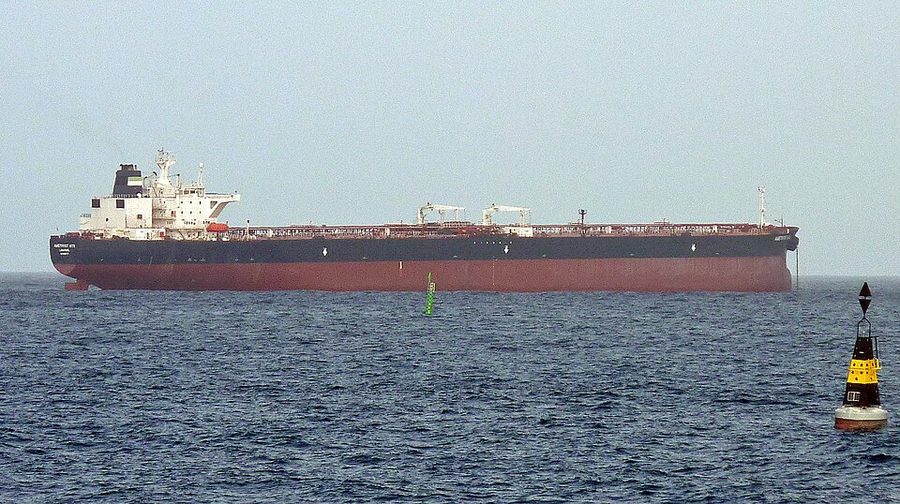
Oil tanker · Marshall Islands flag · built 2003
BACALIAROS: CO₂ emissions 2018–2019
IMO 9233777 2 reporting years
- CO₂ reported 2019
- 14,901 t
- Fuel burned
- 4,758 t
- Distance
- 26,783 nm
- Time at sea
- 3,276 h
- Emitted at berth
- 5% of total
- Share of year under way
- 37%

BACALIAROS against its type
Built in 2003, it is 7 years older than the median oil tanker on this register, which was built in 2010 (2,896 vessels with a known build year). It is one of 793 oil tankers here under the Marshall Islands flag, 22.4% of the 3,548 on the register. The same builder is recorded for 563 other vessels here, 217 of them oil tankers.
Its 14,901 t of CO₂ for 2019 is 1.7 times the median of 8,893 t among the 1,953 oil tankers on this register that reported for 2019. Per nautical mile it emitted 556.3 kg CO₂, 28% above the type median of 433.2 kg. It logged 3,276 hours at sea against a median of 2,280 hours for its type that year. 5.2% of its 2019 emissions were at berth; the median for oil tankers was 8.8%. Its efficiency percentile within the type went from 33 in 2018 to 20 in 2019 (lower is more efficient).
Emissions by year2018–2019
| Year | CO₂ (t) | Fuel (t) | Distance (nm) | At sea (h) | At berth (t) | kg CO₂/nm | EEOI | Percentile |
|---|---|---|---|---|---|---|---|---|
| 2019 | 14,901 | 4,758 | 26,783 | 3,276 | 776 | 556.3 | 5.7 | 20 |
| 2018 | 12,694 | 4,048 | 20,228 | 2,278 | 607 | 627.6 | 6.9 | 33 |
Vessel particulars
- IMO number
- 9233777
- Ship type
- Oil tanker
- Length overall
- 274.0 m
- Year built
- 2003
- Flag state
- Marshall Islands per EU MRV 2019
- Builder
- Samsung Heavy Industries
- Port of registry
- Majuro MRV 2019
- Home port
- Majuro
- Technical efficiency (design)
- EIV (3.06 gCO₂/t·nm)
- Verifier
- Dromon Bureau of Shipping, Greece
- Accreditation
- 1128
- Compliance document issued
- 2020-04-27
- Compliance document expires
- 2021-06-30
Efficiency against its own type2019
Position 346 of 1,739 qualifying oil tankers by EEOI, at the 20th percentile. The dashed line is the type median, 8.4; this vessel reported 5.7.
EEOI divides emissions by transport work, which for this vessel and year was 2,595,933,798 tonne-miles over 26,783 nautical miles.
Reported CO₂ by year
Reported CO₂ in 2019 was 17.4% higher than in 2018, for EU/EEA voyages only.
From 2018 to 2019, emissions rose 17.4% while distance sailed rose 32.4%and CO₂ per nautical mile fell 11.3%.That points mainly to how much the vessel sailed, rather than the other.
Where the 2019 emissions occurred
Sources and how to read this
- Emissions: EU MRV publication (THETIS-MRV), reporting years 2018–2019, published by the European Commission.
- Vessel particulars: Wikidata (CC0) and Wikimedia Commons.
This page draws on 2 MRV reporting years, an efficiency ranking, 4 of 5 vessel particulars and a licensed photograph. Not found in the sources for this vessel: AIS movements in Norwegian waters, a name history, a sanctions listing and US port state inspections.
Empty means unreported, never zero. How EEOI, distance, percentiles and sister ships are handled is explained under reading a vessel page. Something wrong? See corrections.